
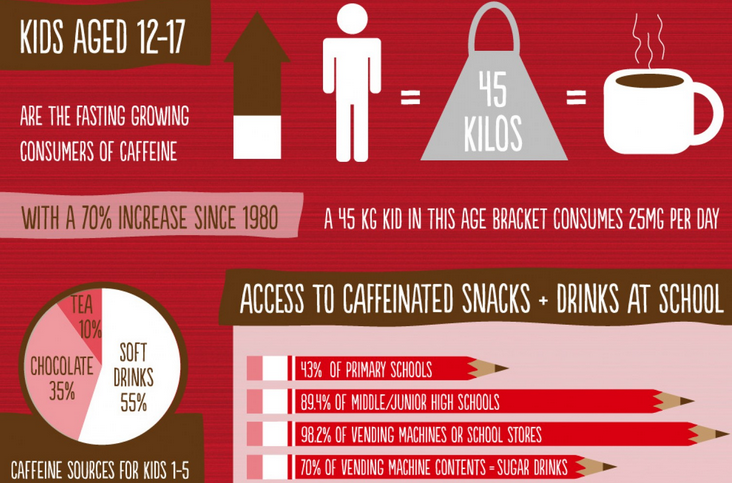
For full infographic click here
How much caffeine are kids consuming, and are we as health teachers doing enough to address it in our curriculum?
That’s a question I asked myself this summer when a new study that looked at caffeine consumption among kids kept popping up in the news. Researchers found that even in low doses, it could have a negative effect on their blood pressure and heart rates.
Turns out, in younger kids gender makes little difference, but in older teens, caffeine has more of a negative impact on boys than on girls… and with reports of teen boys using caffeine powder to fuel their workouts, this is important information to share with the kids.
With soda consumption down, it’s easy to get lax about addressing caffeine in our curriculum, but with the rise of Starbucks, energy drinks, and caffeine powder, we need to give it as much attention as we would any other substance that poses a risk. This new study could be a great opportunity for some student research and PBL.
Here’s a clip from NBC Nightly News to get the conversation started, as well as an article with some links for further research.
For a cross-curricular science connection, check out Neuroscience for Kids from the University of Washington, and for more general information, go to Kid’s Health: Caffeine.