NHES 3: Students will analyze the validity of health information, products, and services.
You see it all over the aisles of the grocery store…. “whole grain”, “gluten free”, “non GMO”. But how much weight to these health claims really carry?
That was the question my students set out to answer as they began a new project analyzing the health claims made on packaged foods.
The other health teacher and I got the idea from our school’s instructional coach who had his students create healthy granola bars for a language arts project at his previous school.
We thought it would be a perfect fit for our 8th grade classes, so we tweaked the project and found it to align with the majority of the National Health Education Standards.
Through focusing on our essential question, we were able to get the kids to think critically about food marketing and then excited about creating a marketing campaign of their own.
The project took over four weeks. If you don’t have the luxury of time, it can be easily adapted to fit any schedule, and each of the lessons could be used as a stand-alone activity.
This was a big one, so I’ve broken the project description down into two parts.
The Energy Bar Project Part 1: Analyzing the health claims of energy bars
Lesson 1 & 2
- Nutrition review using the curriculum and videos from NourishLife.org. Depending on prior knowledge, this might only take one lesson.
Lesson 3
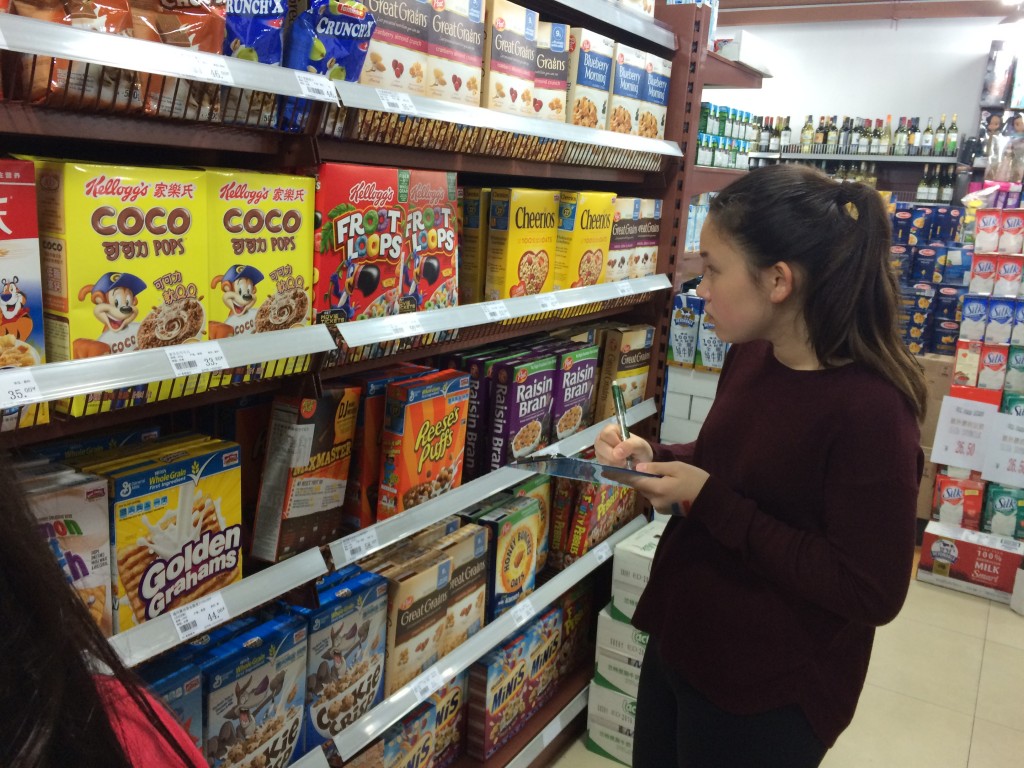
Investigative field trip to the grocery store!
There are three markets just across the street from our school, so we were able to walk the students over during class. They had enough time to look at food packaging and product placement and answer their questions within just one class period. If that’s not an option for you, this part of the project could easily be assigned as homework.
Student Activity Sheet: Grocery Store Research
Lesson 4
- Journal reflection: What stood out to you the most during our field trip? What was an ‘a-ha’! moment you had?
- Discussion of field trip findings
- Taste test!!!
Now for the fun part!
Students were given small bites of six different energy or nutrition bars, rate them on taste, smell and texture, and then rank their top three. The rankings were then used to create groups for the next day’s activity.
Teacher’s note:
Things like this can get expensive, but my subject partner and I have saved money over the last few years by cutting out textbooks and traditional health class DVD’s. By using free (and up-to-date!) resources from the Internet to create our curriculum, we have room in our budget for more “hands-on” materials.
Lesson 5
Digging In and Analyzing Energy Bars!
Student Activity Sheet: Analyzing Energy Bars- Research Sheet
In small groups, students answered questions about the packaging of the bar they were assigned. They used the Internet to help them research ingredients and health claims they did not understand.
This was especially useful for the groups that were assigned the Cliff Bar. When they thought they were going to have to type the ingredients in directly, rather than copy and paste, their poor little heads almost exploded.
Check back next week for The Energy Bar Project Part 2: Creating and marketing our own healthy energy bars.